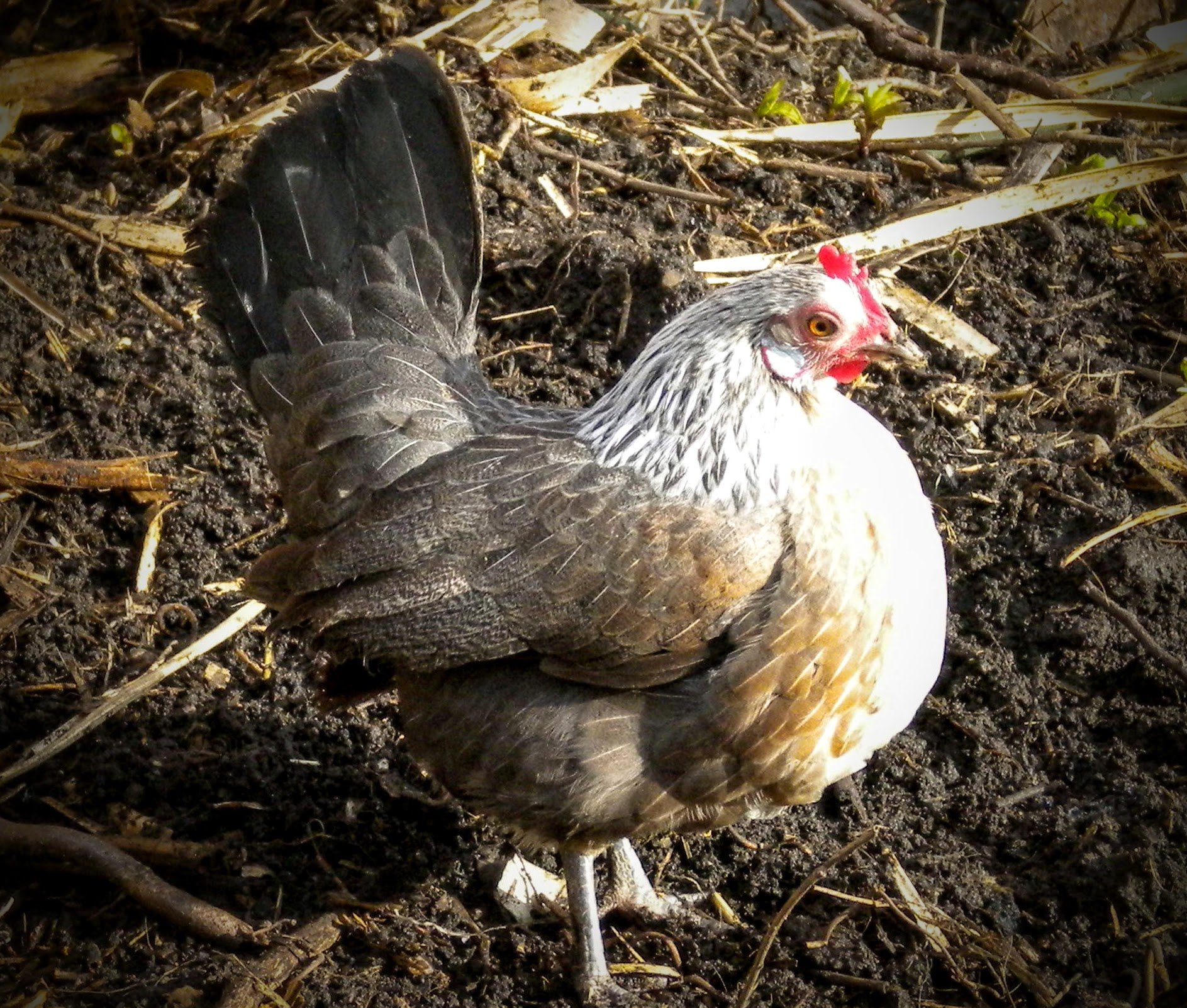
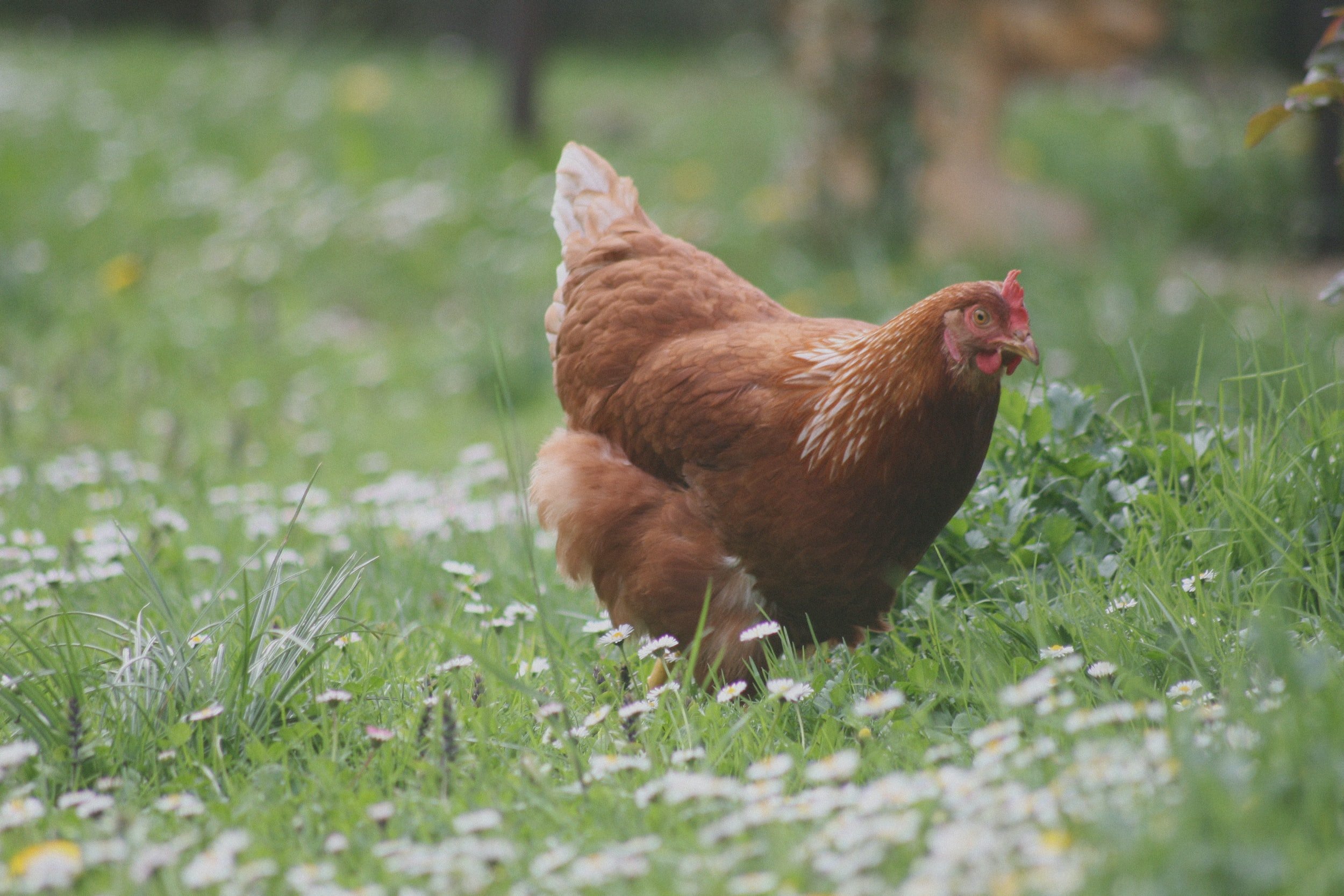
Light Sussex
We have a wide range of chicken breeds at Mudchute, from the unusual Transylvanian naked necks who live in Pets Corner to the beautiful grand Buff Orpingtons.

This is the most popular of the crested breeds. Known as a pure breed from the early sixteenth century. Its most prominent feature is the 'umbrella-like' crest of feathers on its head, which impairs its vision.

The ancestry of the Brahma goes back to China although much of their development took place in the U.S. between 1850 and 1890. Well-feathered shanks and toes enable them to stand cold temperatures very well.

Originated in the county of Sussex, England more than 100 years ago. A general-purpose breed for producing meat and/or eggs. One of the best dual-purpose chickens.

The Totenko Long Crower is an ornamental Japanese chicken breed that can crow for up to 20 seconds! These birds resemble the phoenix varieties with extremely long tail feathers in the cockerels (however they can be distinguished from the phoenix by their olive green legs and open, rather than tightly closed tail). You can find out more about the breed and hear them crow here.

The Buff Orpington originates from Orpington, in the London Borough of Bromley. The Orpington breed was first developed for eggs and meat in 1886 by crossing Minorcas, Langshand and Plymouth rocks and the resulting birds were black (to hide the dirt and soot of London!). The buff is a golden variety with an impressive size and feathering. They are excellent layers, producing 175-200 eggs per year.

The Transylvanian Naked Neck, or Turken, is a Hungarian breed that naturally lacks feathers on its neck and vent. The breed is alternatively known as the Turken because of the mistaken idea that the animals were a cross between a chicken and a turkey. Although often kept as a show bird, these birds are also reasonable layers and meat birds. They have existed in the UK since the 1920s.

The Cream Legbar resulted from crosses between Brown Leghorns, Barred Rocks and some Araucanas and were developed during the 1930s. The birds are renowned for laying blue-green eggs and their chicks can sexed at hatching by the colour of their feathers (autosexing). These birds have a crest at the back of their heads