GOATS
We have several breeds of goat on the farm, from small pygmy goats to large milking breeds. As their reputation implies, goats are voracious eaters, but it is extremely important that you do not feed them bread as this swells in their stomachs and can make them very poorly!
-

Pygmy Goats
The pygmy goat is hardy, good natured and genetically small. They are originally from Africa but are mainly kept as pets in the UK.
The Pygmy goat is an asset in a wide variety of settings, and can adapt to virtually all climates. they are a responsive pet, a cooperative provider of milk, and an ecologically effective browser.
Pygmy goats are precocious breeders, bearing one to four young every nine to twelve months after a five month gestation period. Newborn kids will nurse almost immediately, begin eating grain and roughage within a week, and are weaned by three months of age. Find out more about pygmy goats from the Pygmy Goat Club of Great Britain.
-

Golden Guernsey
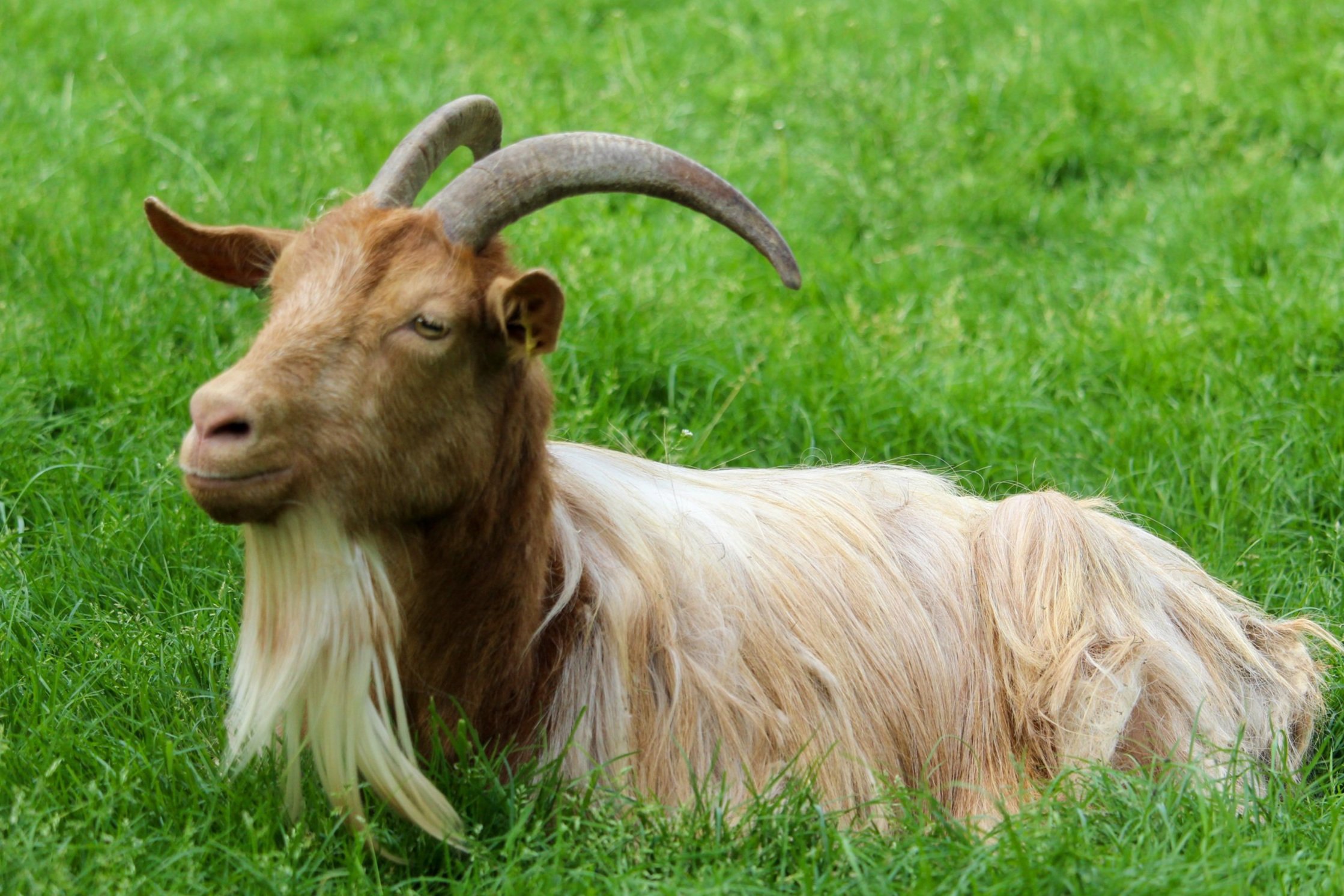
The Golden Guernsey are a small, fine-boned milking breed with a distinctive golden coat and as their name suggests finds its roots on Guernsey. The breed was nearly wiped out during WWII when goats on the island were slaughtered during the German occupation. Miss Miriam Milbourne was able to hide a small group of goats allowing the breed to survive. Find out more from the RBST and Golden Guernsey Goat Society.
-

Bagot Goat
The Bagot is a striking parkland breed with the ability to forage in rough scrubland.
Bagot goats are small to medium in size with both sexes having large curving horns. They have long hair, with a distinctive colour pattern being black forequarters and white on the rear part of the body. Some have a white blaze.
The first account of the breed is of a herd at the Blithfield Estate in Staffordshire owned by Sir John Bagot in 1389.Although the exact origin of the breed is unknown. Bagots are mainly used for conservation grazing, or more accurately conservation browsing.
Their primitive nature means they are hardy and low input. Goats are good at clearing scrub and will usually choose to browse hedges over grazing grass. The Bagot Goat is classed as at Risk on the Rare Breeds Survival Trust’s Watchlist with only 500-1000 registered breeding females left.
-
Anglo Nubian
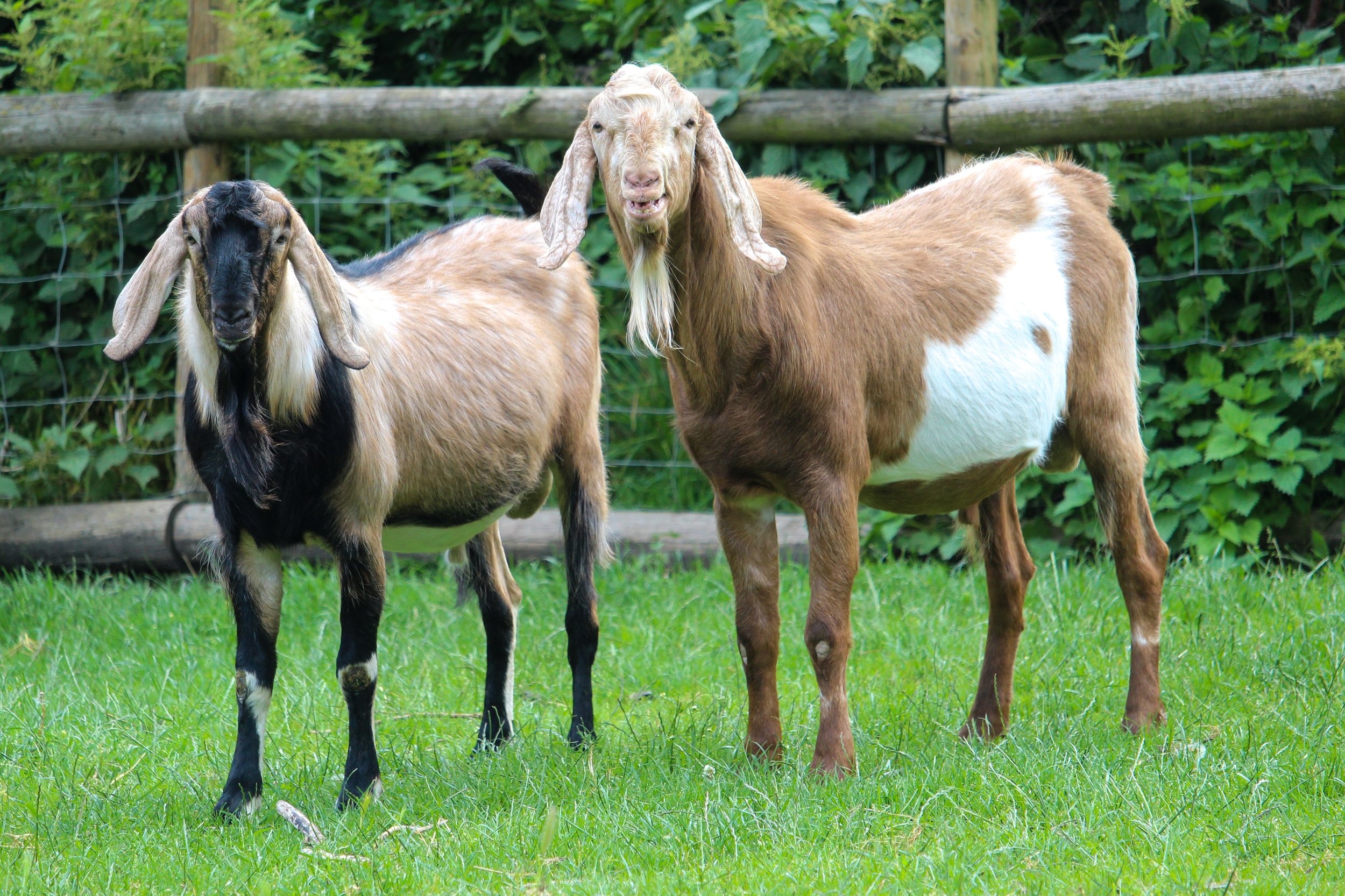
Anglo-Nubian Goats are one of the heaviest and tallest breeds of goat with males weighing up to 140kgs and females to 110kgs. The breed was developed in Britain from excellent milking stock and crossed with goats from the Middle East and North Africa, hence the name! You can easily distinguish our Anglo-Nubians from our other breeds by their long, pendulous ears and distinctive faces which a ‘Roman nose’ (convex nasal bone).